Gas Cylinder Guide
– Cylinder Shoulder Stamping & Labelling
Identification of Fire Protection Cylinders
In Australia, gas cylinders are identified in accordance with AS 4484, which places primary emphasis on cylinder labels and markings for the positive identification of cylinder contents.
Cylinder colours and markings may vary between manufacturers, product ranges, pressure ratings and applications. Colours should be considered a visual identification aid only and not the sole means of determining cylinder contents.
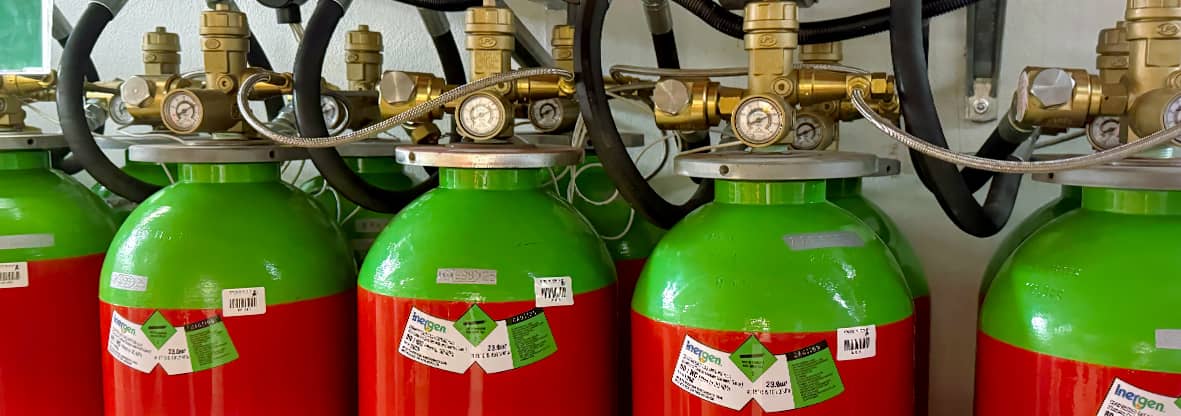
Within the fire protection industry, cylinders are typically identified by two primary labels: the manufacturer's identification label and the contents label. The contents label identifies the extinguishing agent, blend composition (where applicable), concentration of each constituent gas, and the mass of agent contained within the cylinder.
For this reason, positive identification of any fire protection cylinder should always be made using the approved labels and markings. Cylinder colours provide a useful visual reference, but should be considered supplementary to the information contained on the cylinder labels.
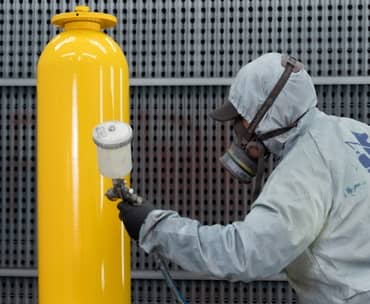
Cylinder colours, shoulder markings, labels and test stampings form an important part of a cylinder's identification and service history. Any changes to these markings should only be undertaken by an authorised gas cylinder inspection and re-qualification facility operating in accordance with the applicable Australian Standards and regulatory requirements.
As an approved gas cylinder test station, Fire Systems Products is authorised to inspect, test, re-qualify and remark gas cylinders. This includes the application of test stampings, updating cylinder identification markings and restoring approved colour schemes as part of the cylinder reconditioning process, ensuring compliance with applicable Australian Standards and Work Health and Safety requirements.
Label
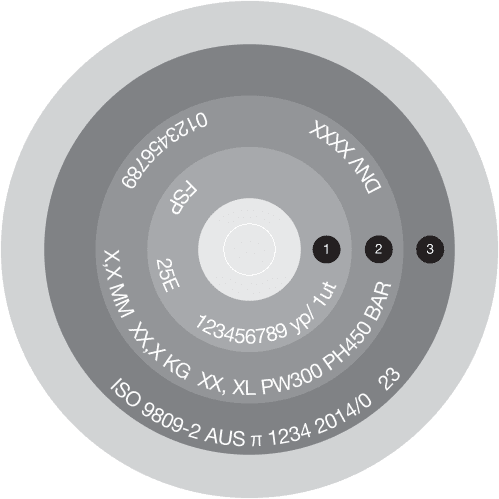
The cylinder shoulder is provided with a filling (banana label) with the ADR diamond positioned in the direction of the valve outlet. Information: INERGEN, IG541, UN1956 Compressed gas N.O.S (Nitrogen, Argon).
On the cylindrical part of a label is fitted to identify the system, for example: 300 BAR. Additional labels maybe fitted depending on the variant and approval status.
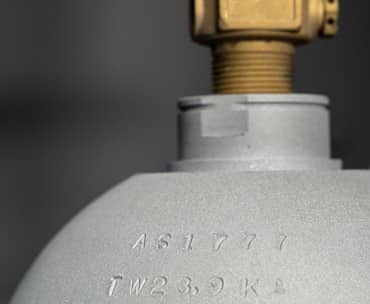
Stamping
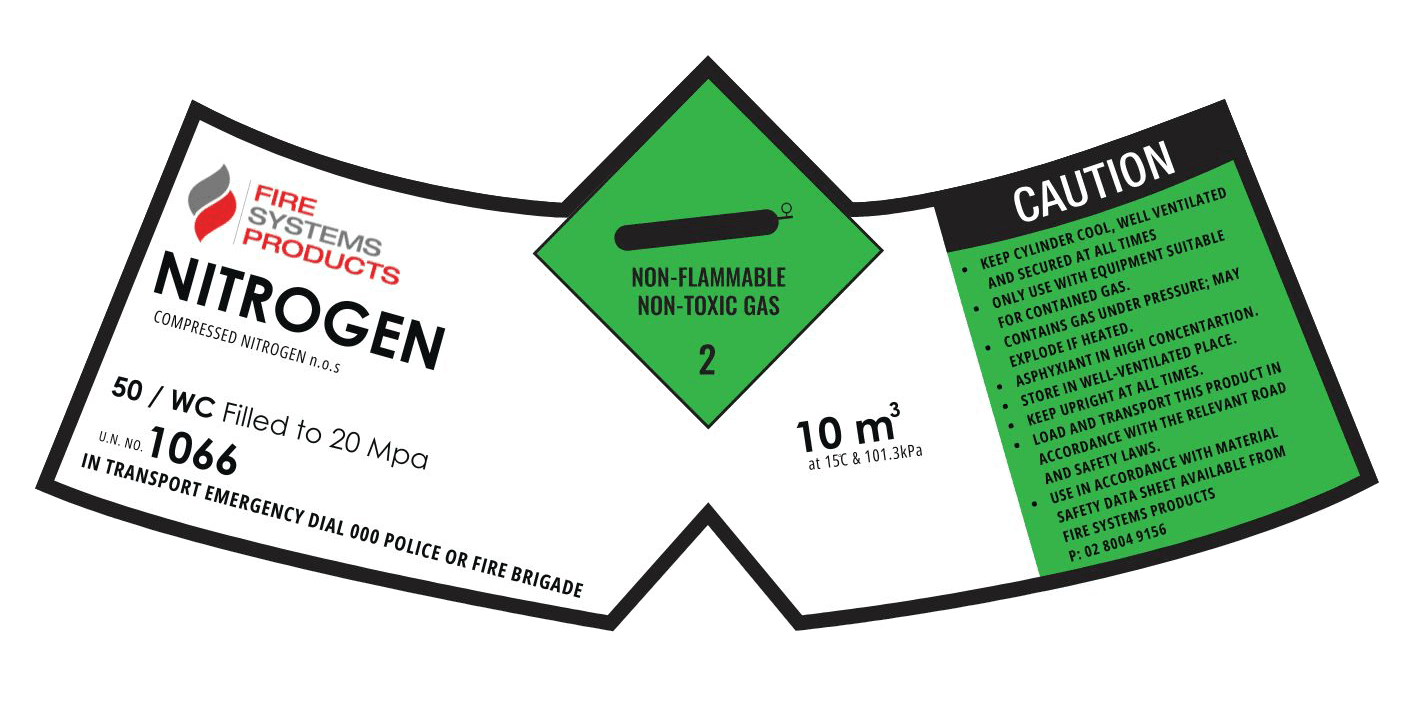
Cylinder shoulder stamping is divided into three sections.
- Cylinder valve thread (25E), logo of manufacturer, manufacturer’s serial number, test methods.
- Wall thickness, mass of empty cylinder without valve and paint. Water volume of cylinder, working pressure (300), hydraulic test pressure (450).
- Standard of the construction, country of origin, Pi for TPED compliance, 4 digit Notified Body Number for the construction approval. Date of manufacturing/testing (2014/02), year for next test/inspection (23). Additional approvals or local authority approval markings if required.
Barcode Label – Serial Number
This serial number is used for tracking at Fire Systems Products and should be used for any questions raised on the cylinder.
What to look for
Always use the cylinder labels and markings to positively identify the contents.
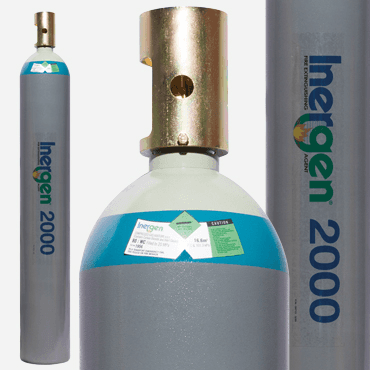
Contents (Banana) Label & Manufactures Identification Label
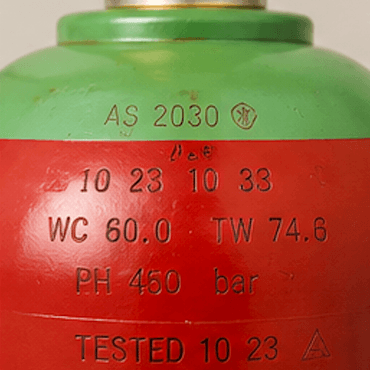
Shoulder Stamping
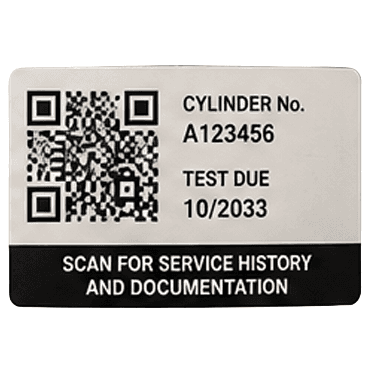
QR Code/ Bar Code
Need help identifying your cylinder?
Send us some photographs (PNG, PDF, JPG) of your cylinder, be sure to also include close-up images of the shoulder details and labels.
In addition, your email should include any copies of your cylinder test certificates, and include a description of the condition of the cylinder.
Be sure to include all relevant contact details.
Gas Cylinder Guide
– Types and Colour Identification
In Australia, compressed gases are stored in three different cylinder types, high pressure industrial gases, LPG and acetylene. Each of these cylinder types has a range of standard sizes, which are denoted by a letter code.
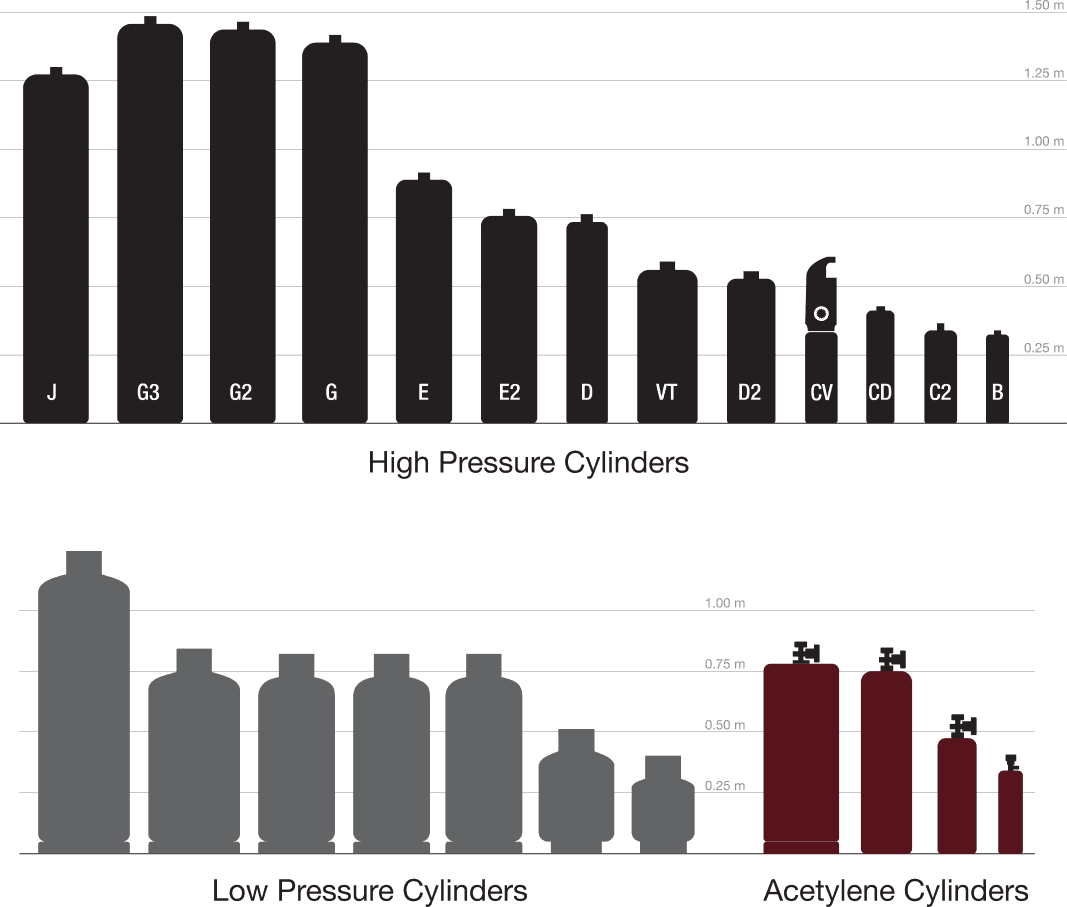
Common Gas Cylinder Colour Codes for Australia
Carbon Dioxide gas cylinder colour code is:
GREEN GREY
Nitrogen gas cylinder colour code is:
PEWTER
Argon gas cylinder colour code is:
PEACOCK BLUE
Helium gas cylinder colour code is:
BROWN
LPG gas cylinder colour code is:
SILVER or GREY
Acetylene gas cylinder colour code is:
CLARET
Hydrogen gas cylinder colour code is:
SIGNAL RED
Oxygen gas cylinder colour code is:
BLACK
Nitrous Oxide gas cylinder colour code is:
Ultramarine
Ethylene gas cylinder colour code is:
VIOLET
Oxygen gas cylinder colour code is:
WHITE
Argonite gas cylinder colour code is:
APPLE GREEN
Gas Cylinder Colour Identification
Colour names refer to Australian Standard AS 4484. Imported cylinder colours may vary.
Oxygen
Body: black
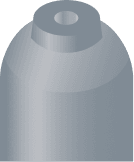
Nitrogen
Body: Pewter
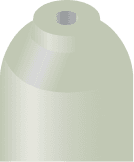
Carbon Dioxide
Body: Green grey
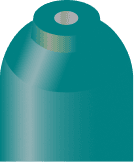
Argon
Body: Peacock blue

Helium
Body: Brown
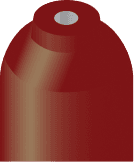
Acetylene
Body: Claret

Hydrogen
Body: Signal red
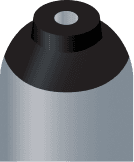
Air
Band: Black
Body: Pewter
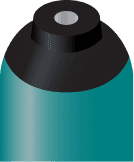
Argoshield® 40
Band: Black
Body: Peacock blue

Argoplas® 5
Band: Signal red
Body: Peacock blue
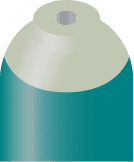
Argoshield® 52
Band: Green grey
Body: Peacock blue
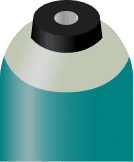
Argoshield® Light
Band: Black, Green Grey
Body: Peacock blue
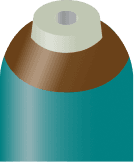
Argoshield® 100
Band: Green grey, brown
Body: Peacock blue
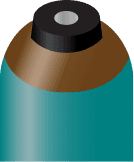
Stainshield® 69
Band: Black, brown
Body: Peacock blue
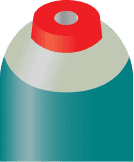
Stainshield® 66
Band: Signal red, green grey
Body: Peacock blue
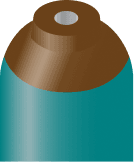
Alishield® Light
Band: Brown
Body: Peacock blue

Argoshield® Heavy
Band: Peacock blue
Body: Brown
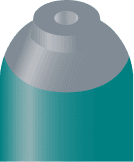
Argoshield® 40
Band: Pewter
Body: Peacock blue
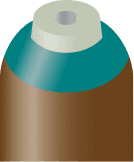
Stainshield® Pipeline
Band: Green grey, peacock blue
Body: Brown
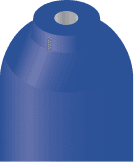
Nitrous Oxide
Body: Ultramarine

Methane (imported)
Band: Signal red
Body: Silver grey
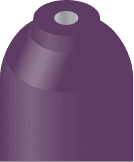
Ethylene
Body: Violet

Insectigas® D
Band: Golden Yellow
Body: Green grey
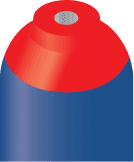
Agrigas® M (imported)
Band: Signal red
Body: Blue

Pestigas®
Band: Green Moss
Body: Green Grey

Ripegas®
Band: Violet
Body: Sky blue

Vapormate®
Band: Signal red
Body: Green grey

Deodourgas®
Band: Deep rose
Body: Green grey

Deodourgas®
Band: Signal rose, deep rose
Body: Green grey
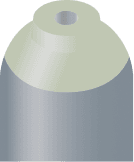
Multimix®
Band: Green Grey
Body: Pewter

Carbon Monoxide (imported)
Band: Golden yellow
Body: Signal red
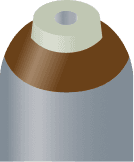
Lasermix® 321
Band: Green grey, brown
Body: Pewter
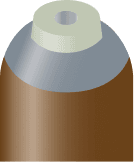
Lasermix®
Band: Green grey, pewter
Body: Brown
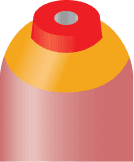
Lasermix® 690 (imported)
Band: Signal red, golden yellow
Body: Pink
Fire Gas Suppression Examples
Body colour denotes balance gas or major component, Band colour/s denote minor components or mixture characteristics

INERGEN 150 and 200
Band: Peacock blue, green grey
Body: Pewter

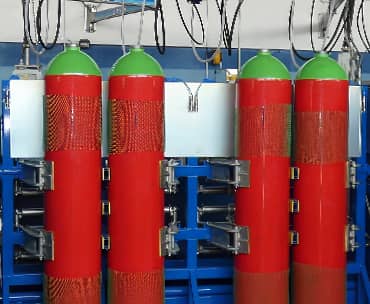
INERGEN 300
Band: Apple green
Body: Signal red

C02, FM-200, Novec-1230
Body: Signal red

NAF-S-III
Body: Vivid white
HiQ Scientific Gas Mixtures (Examples for Australia)
Body colour denotes balance gas or major component, Band colour/s denote minor components or mixture characteristics
Multi-Component
GOLD
Non-toxic, non-flammable
BROWN
Oxidising or oxygen component
BLACK
Hydrocardons
SILVER
Flammable
SIGNAL RED
Toxic
Golden Yellow
Flammable
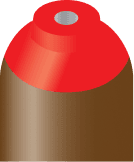
2 Component Mixture Eg: Hydrogen in Helium
Band: Signal red
Body: Brown
Toxic

2 Component Mixture Eg: Sulphur Dioxide in Nitrogen
Band: Golden yellow
Body: Pewter
Toxic and flammable

2 Component Mixture Eg: Methanol in Carbon Dioxide
Band: Golden yellow, signal red
Body: Green grey
AS 4484 Specified Gases
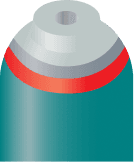
4 Component Mixture Eg: Hydrogen, Nitrogen, Methane in Argon
Band: Silver grey, pewter, signal red
Body: Peacock blue
Hydrocarbon mixture
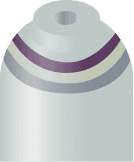
Eg: Ethane, Ethylene, Carbon Dioxide, Nitrogen in Methane
Band: Silver grey, violet, green grey, pewter
Body: Silver grey
Oxidising
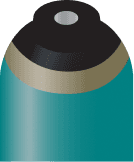
Multi-component Mixture Eg: Carbon Dioxide, Helium, Nitrogen, Oxygen in Argon
Band: Black, gold
Body: Peacock blue
Non-toxic, non-flammable
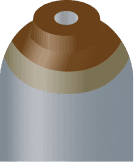
Multi-component Mixture Eg: 25ppm H2S, 100ppm CO, 25% CH4, 18% O2 in Nitrogen
Band: Brown, gold
Body: Pewter
Medical Gas Cylinder Identification
Colour names refer to Australian Standard AS 4484.
Inhalo®

Body: White
Oxygen

Body: White
Nitrous Oxide
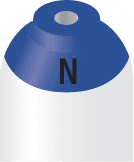
Band: Ultramarine
Body: White
Entonox
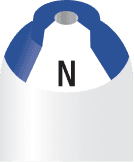
Band: Ultramarine, White
Body: White
Air
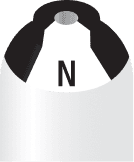
Band: Black and white
Body: White
Carbon Dioxide
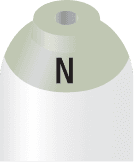
Band: Green Grey
Body: White
Carbon Dioxide Liquid Withdrawl
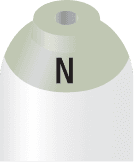
Band: Green grey
Body: White
Carbon Dioxide Liquid Withdrawl
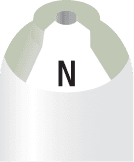
Band: Green grey, white
Body: White
Helium
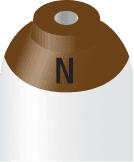
Band: Brown
Body: White
Heliox

Band: Brown, white
Body: White
NOTE: Illustrations depicted here are information purposes only. SOURCE: BOC Gas